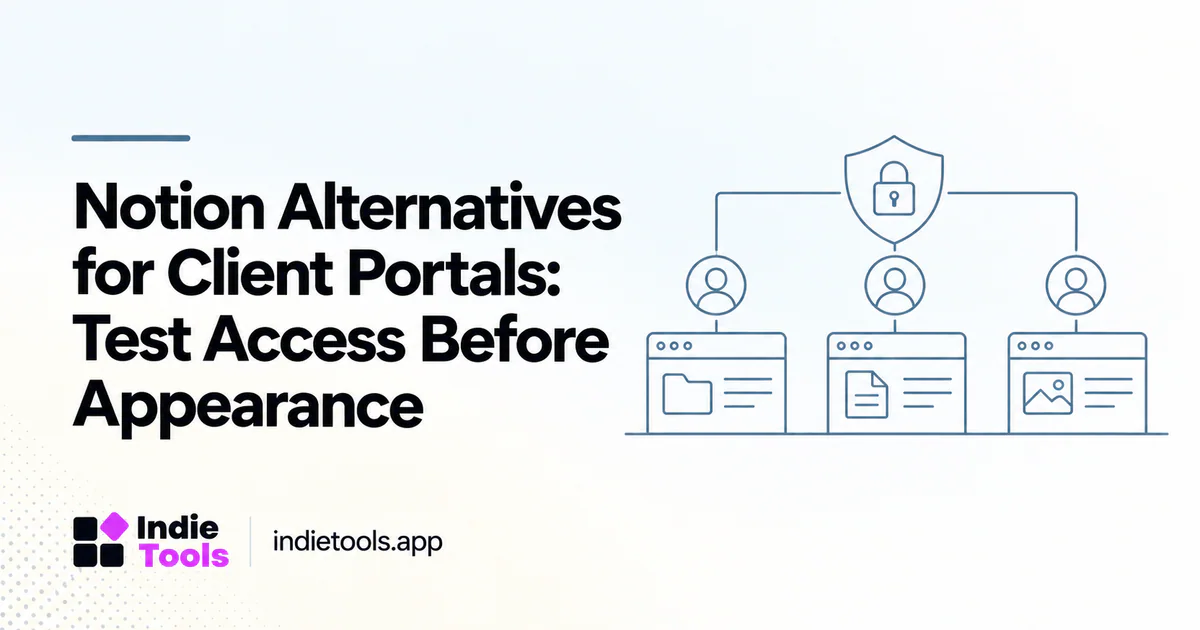
A client portal alternative should first prove that each client can access the right information and no one else's. Page design, templates and branding matter after that boundary works. A tool that is excellent for internal notes is not automatically suitable for customer-facing collaboration.
This guide is for a team replacing or supplementing a Notion-based client workflow. It does not assume Notion is unsuitable; its documented permissions may already meet your needs. The purpose is to identify the requirement that would justify a different system. [1]
Describe the client journey
Map invitation, first login, document access, comments, file delivery and project closure. Include what happens when a client adds a colleague or an employee leaves your team. These lifecycle steps expose requirements that a static portal template cannot demonstrate.
Decide whether clients need to edit content, approve work or only read updates. A read-only resource library is a different product problem from a workspace containing confidential project discussions and uploaded files.
Separate three types of alternatives
A dedicated portal product may package client access, file sharing and approvals. A documentation workspace may emphasize structured pages and collaboration. A custom application may provide the exact workflow but require engineering and operational ownership.
Docmost documents page permissions and public sharing behavior, including edition-specific access to certain controls. [2] [3] It is an example worth investigating for a document-centered workflow, not evidence that every deployment is a complete client portal. Verify the current edition and guest model before including it in a shortlist.
Run a two-client isolation test
Create fictional Client A and Client B with separate projects. Add an internal-only note and a shared deliverable to each. Test access as both clients and as a teammate with limited permissions.
Check navigation, search, notifications and direct links. A page hidden from the sidebar is not necessarily inaccessible. The test should confirm the intended permissions rather than rely on the fact that a client is unlikely to guess a URL.
Test files and approvals
Upload a sample deliverable, replace it with a revised version and request feedback. Confirm that the client knows which version is current and that the team can trace an approval to the correct artifact.
Avoid assuming that a comment such as “looks good” constitutes the approval process your business needs. Define what the portal records and what the team considers complete. Where contractual requirements matter, review them separately with appropriate expertise.
Review the experience outside the happy path
Expire an invitation, remove a user and close a project. Inspect what the former participant can still access. Then test account recovery and the support route for a client who cannot sign in.
Branding should clarify the relationship rather than hide the provider or create confusion about where credentials are entered. A polished custom domain is helpful only when the underlying access and recovery workflow remains understandable.
Compare maintenance and migration
Estimate the effort of setting up each new client and keeping shared templates current. A portal that requires many manual permission changes can become difficult to operate safely as the customer count grows.
Export a completed project with its files and meaningful history. Decide which records remain available after closure and who is responsible for retention. These requirements should influence the shortlist before the team invests heavily in custom design.
Questions before replacing the current setup
Is a public shared page a private portal? No. Public sharing and authenticated client access are different models; test the one your workflow requires.
Should a founder build a custom portal? Only when the requirements justify the engineering and ongoing maintenance compared with existing products.
How can IndieTools help? Use relevant productivity and collaboration listings to discover candidates, then apply the same two-client test to every option. [4]
Explore related IndieTools resources: reported technology collections.
Continue your research
- Productivity Tools for Asynchronous Founder Teams
- Open-Source vs Free SaaS Alternatives
- Find Software Alternatives by Workflow
Sources and verification
Sources consulted for this article on October 1, 2026. Product capabilities are documented claims unless an actual test is explicitly described.