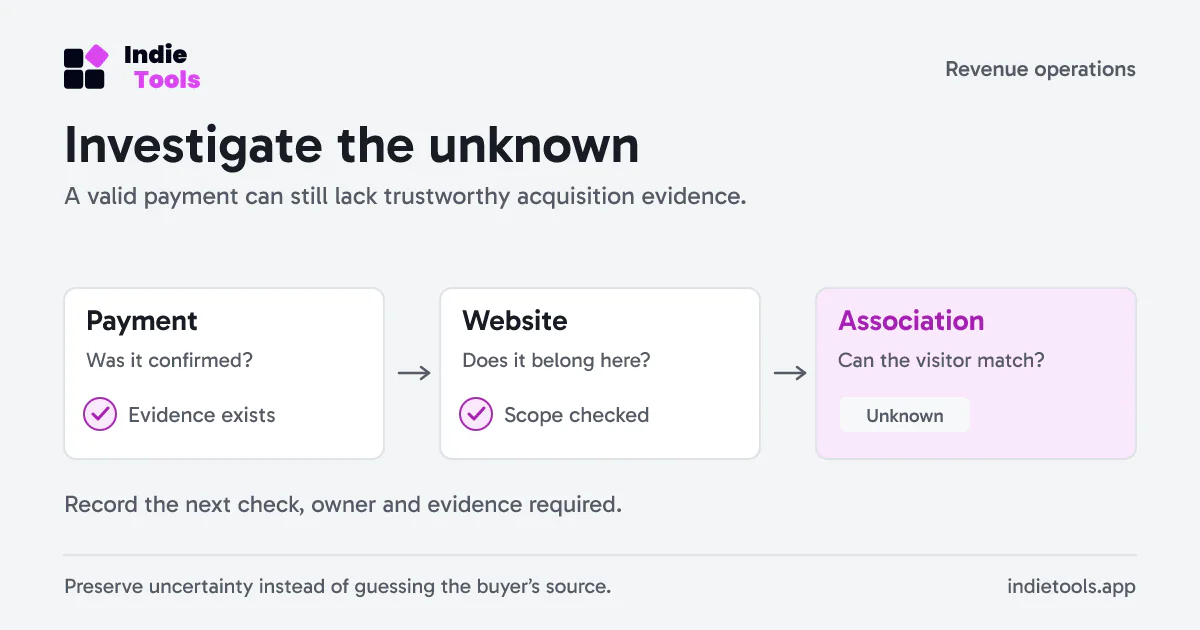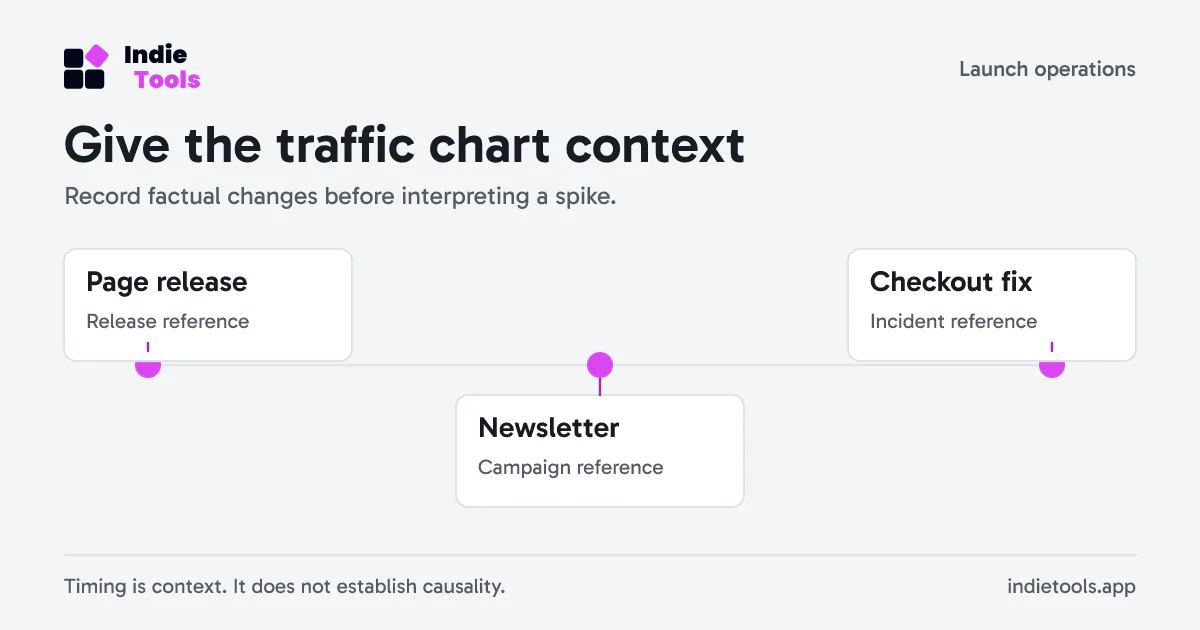
A traffic chart shows when activity changed. A launch timeline records what your team changed around the same time. Keeping both makes a spike easier to investigate without turning a coincidence into a marketing success story.
Use short, factual entries with an exact time, an owner and supporting evidence. The timeline should help someone who was not in the launch chat understand what happened a month later.
Record events before inspecting the outcome
Create the first entries as work ships. If you wait until a spike appears, the timeline can become a selective story built around the result you wanted.
For a fictional launch, the record might contain:
| Time in the website timezone | Event | Evidence to retain |
|---|---|---|
| 09:00 | Pricing page deployed | Release identifier and change summary |
| 09:30 | Partner newsletter sent | Campaign identifier and approved landing URL |
| 10:15 | Public community post published | Exact public post URL |
| 11:20 | Checkout error corrected | Incident reference and affected route |
These entries describe actions, not outcomes. “Newsletter sent” is a defensible note. “Newsletter doubled qualified demand” needs separate evidence and a definition of qualified demand.
Put context on the relevant chart point
Revfaro's chart notes let authorized users add a note by selecting a point on the traffic chart. Notes are scoped to the website and use its timezone. Viewers can read them; owners, admins and website Managers can add or edit them.
Keep the text short enough to scan: what changed, when and where to investigate. A note such as “Pricing revision deployed; annual comparison clarified; release R17” is more useful than a paragraph containing every launch task.
Revfaro notes are private dashboard context, not a public announcement or an automatic social-listening feed. A chart marker does not establish that an X or Reddit post caused the visits. If a public post matters, retain its URL in the team's evidence record and inspect the available referral or campaign data separately.
Compare several explanations
Return to the fictional timeline. Traffic rises shortly after the community post. At least three explanations deserve checking: the newsletter arrived later than expected, the community sent visitors, or an unrelated source changed during the same period.
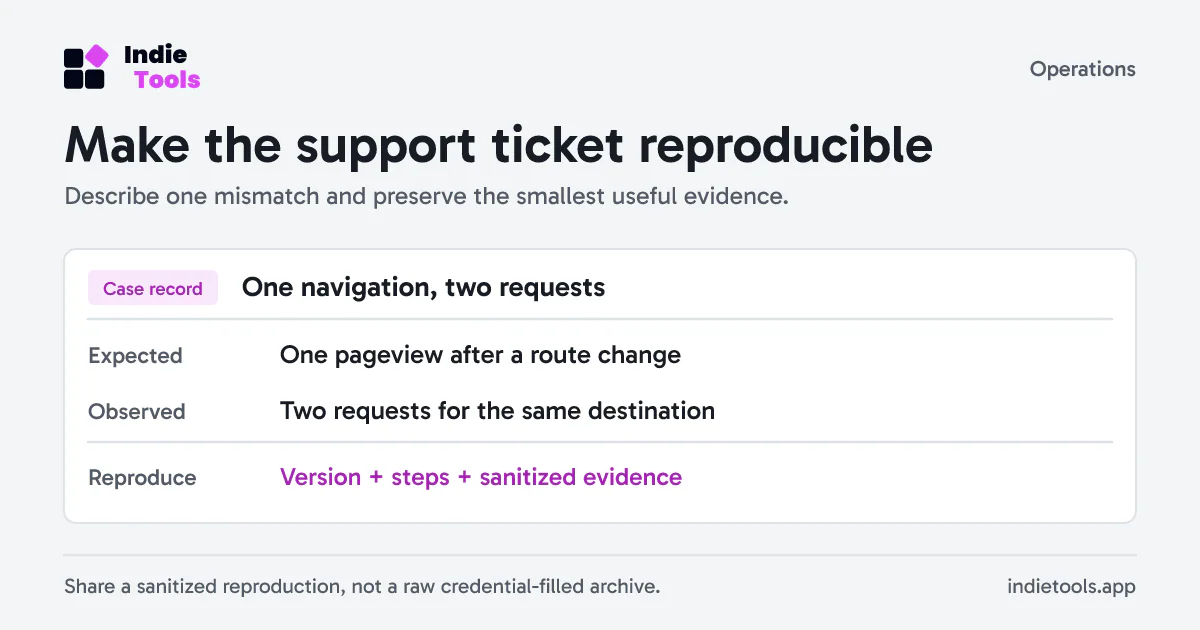
Segment by landing page, referrer and campaign values where available. Check whether the apparent rise is pageviews, unique visitors or another measure. A client-side navigation defect can increase pageviews without a comparable increase in people.
Also inspect the checkout fix. If conversion improves after 11:20, that might reflect fewer failed attempts rather than better acquisition. Both matter, but they imply different next actions. Preserve the release and incident entries even if they make the launch story less tidy.
Add one observation after the event
Separate the original event from the later review. A useful observation states the reporting window, metric and uncertainty: “Reviewed the following full day; campaign-tagged visits were visible, but several purchases remained unattributed.”
Do not silently rewrite the original note to match the final interpretation. When a product provides edit history, use it. In a separate worksheet, record the reviewer and the evidence supporting any correction.
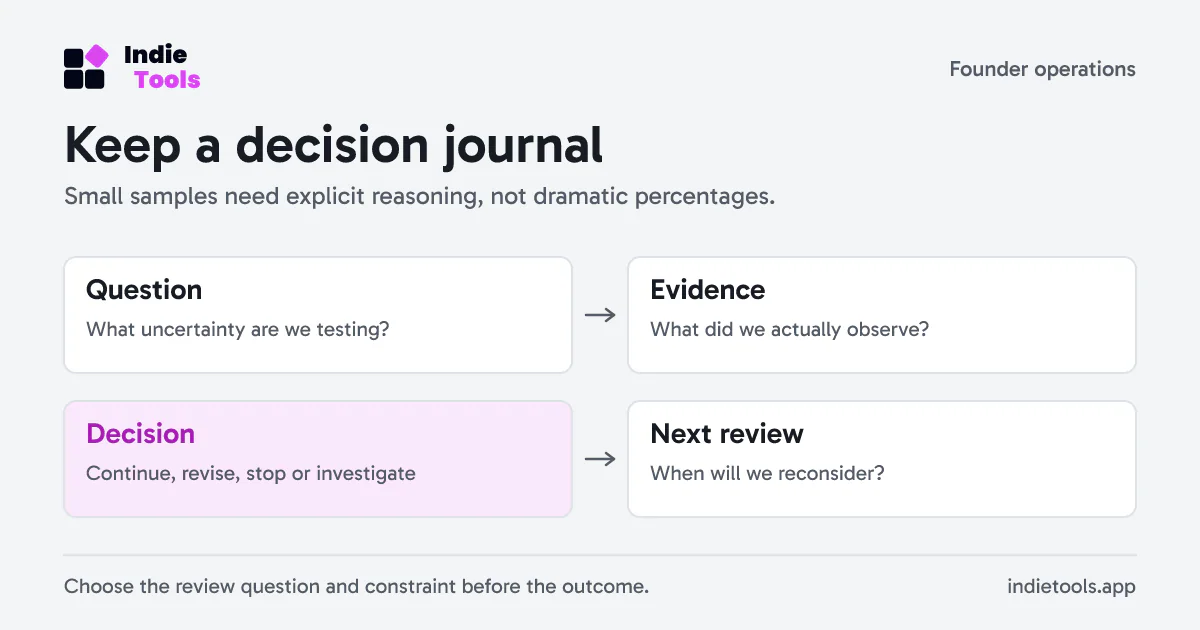
For small launches, avoid declaring a winner from a few conversions immediately after publication. Decide beforehand when you will revisit the result and which signals would justify continuing, changing or stopping the campaign.
Keep the timeline useful after launch week
Continue logging changes that affect interpretation: tracker updates, consent changes, domain moves, major pricing edits and known outages. Avoid flooding the chart with every internal meeting or routine deployment. A marker earns its place when it can explain a measurement change.
The 30-day post-launch discovery plan can provide the review cadence. For traffic from paid placements, the featured placement measurement framework helps turn the timeline into a bounded investigation rather than a claim that timing alone proves value.
 Revfaro