Low-volume acquisition needs a decision journal more than a dashboard full of percentage changes. When a channel produces only a handful of customers, one additional purchase can make the reported rate look dramatically different without answering whether the next campaign will perform better.
Record the decision before the outcome: what you are trying, what it costs, what evidence would change your mind and when you will review it. This does not eliminate uncertainty. It keeps uncertainty from being rewritten after the result arrives.
Write a testable operating question
Replace “Does this channel work?” with a narrower question. For example: “Will a sponsored placement send relevant visitors to our integration guide, and do any of those visitors complete the setup goal during the review window?”
The question names the audience, destination, action and time boundary. It does not assume that every purchase following the campaign was caused by it. If payment evidence matters, add it as a separate outcome rather than changing the goal after seeing a sale.
Choose a spending or effort limit before starting. This is an operating constraint, not a statistical threshold. A founder can reasonably stop an expensive experiment without proving that the channel never works.
Keep counts beside rates
Imagine two fictional periods:
| Period | Observed sessions | Paid customers | Customers per session |
|---|---|---|---|
| First review | 100 | 4 | 4% |
| Second review | 100 | 5 | 5% |
The rate rose by one percentage point, or 25% relative to the earlier rate. Both calculations are correct, but “conversion improved 25%” hides that the difference is one customer.
Show the counts and avoid presenting this example as statistically conclusive. Check whether the periods used the same acquisition source, offer, audience and observation window. A recently acquired cohort may not yet have had the same opportunity to purchase.
Use one page for each decision
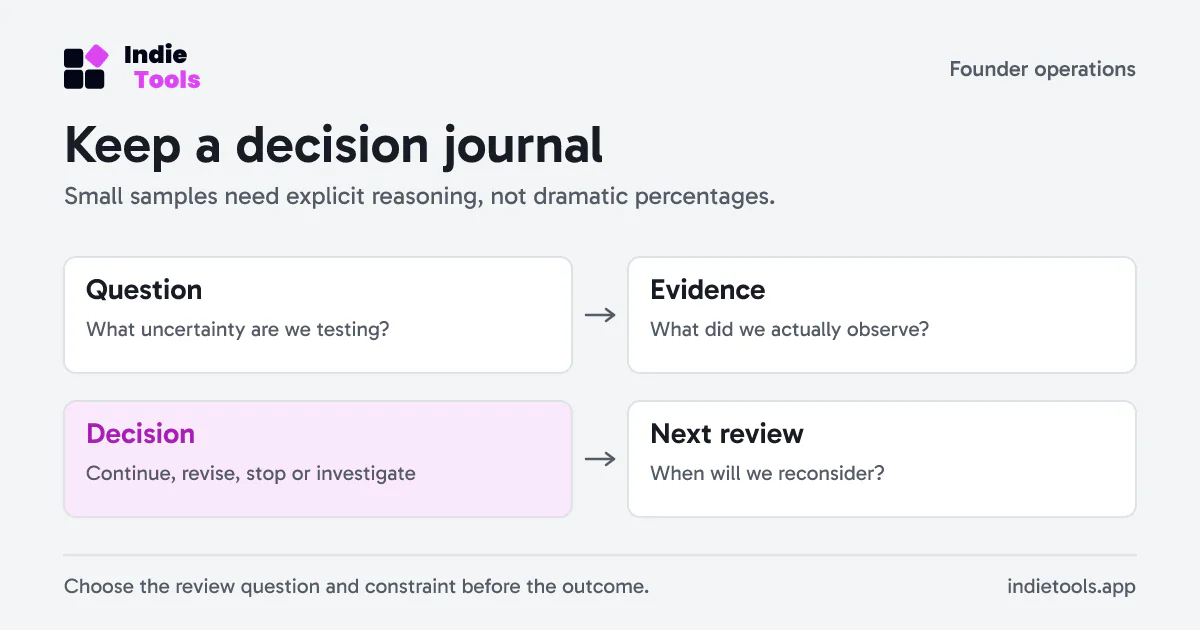
The journal entry should contain:
- Question: the specific uncertainty being tested.
- Scope: channel, landing page, audience and campaign identifiers.
- Constraint: spending limit, time budget and stop conditions.
- Evidence: counts, confirmed payments and known attribution gaps.
- Confounders: pricing changes, outages or simultaneous campaigns.
- Decision: continue, revise, stop or gather a specific missing observation.
- Next review: a date or a concrete evidence milestone.
Write a short explanation for the decision. “Continue because two qualified prospects requested the missing integration” is more informative than a green status badge. Keep qualitative observations labeled as such; they do not become a conversion count.
Connect the journal to measured evidence
Revfaro can put campaign traffic, goals, visitor journeys and supported payment attribution in the same investigation. Its source association still describes observed attribution, not a controlled proof that a channel caused a purchase.
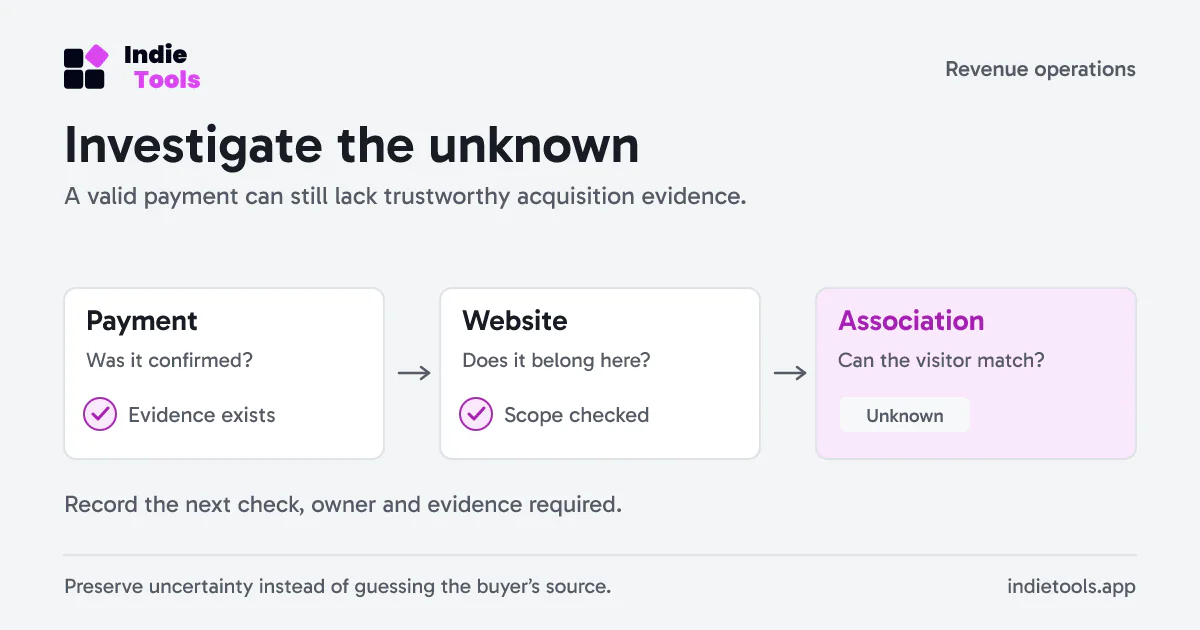
Keep unattributed revenue visible and separate renewals from newly acquired customers. Do not allocate unknown payments to whichever experiment you prefer. Use a chart note for a launch or pricing change, then retain the fuller decision and its reasoning in the journal.
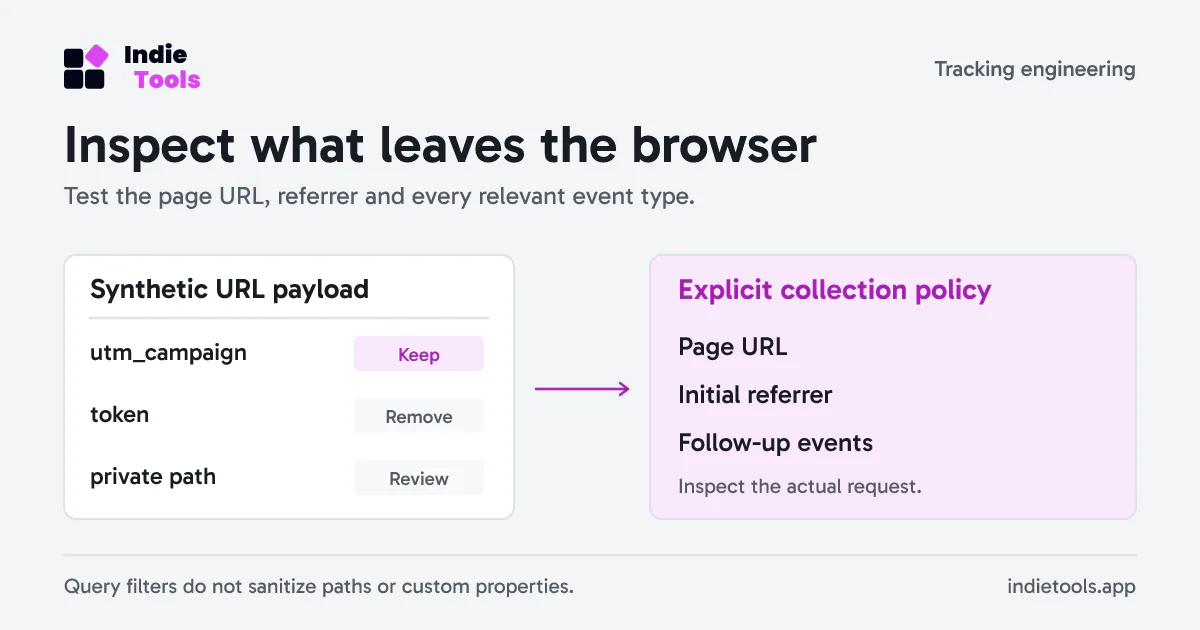
When measurement changes, mark the break. Adding a goal halfway through a period or changing the query allowlist can alter the evidence available. A clean-looking comparison is not valid if the underlying collection rules changed silently.
Decide what the next experiment needs
A useful review ends with a bounded action: improve the landing page, test a different audience, fix an instrumentation gap or stop spending. “Collect more data” should name the missing observation and the cost of obtaining it.
For paid discovery, the small directory advertising experiment provides a related planning framework. Use the 30-day post-launch discovery plan to schedule reviews without treating daily dashboard movement as a new strategy.
 Revfaro