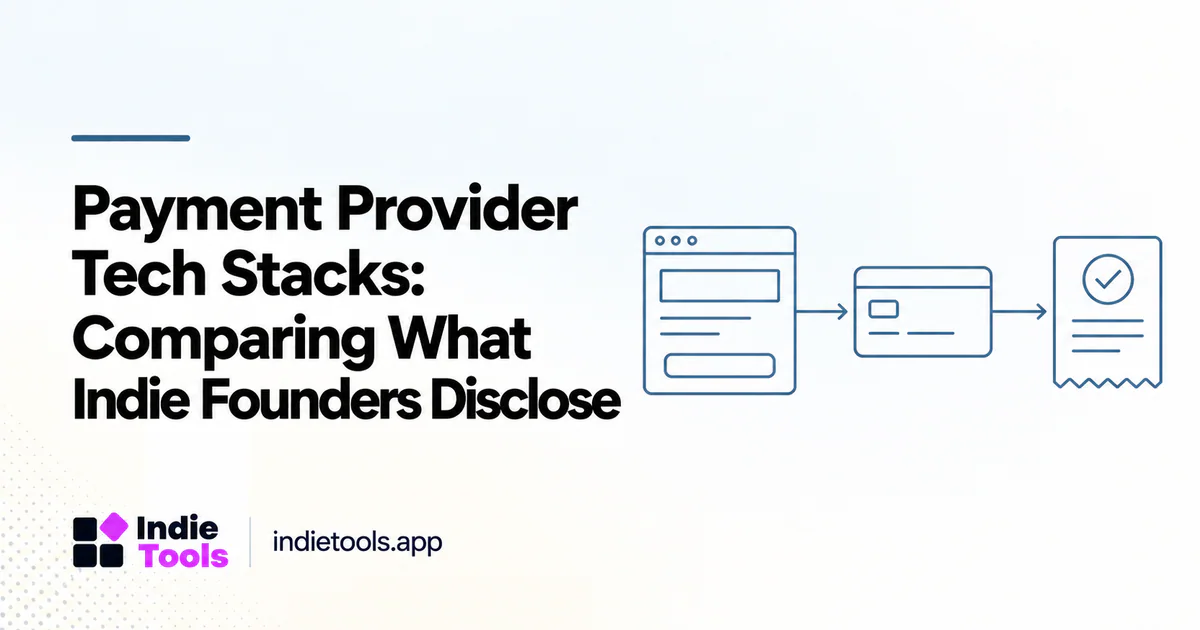
A payment-provider label is the beginning of billing research, not a complete account of how a SaaS sells, provisions and supports subscriptions. Compare the commercial model, checkout experience and lifecycle integration separately. Verify current provider eligibility and terms before making a decision.
This guide is a technical evaluation framework, not tax or legal advice and not a recommendation that any provider is available to every business.
Define the billing lifecycle
Map the customer journey from choosing a plan to gaining access, renewing, changing plans and cancelling. Include failed payments, refunds and delayed notifications. A checkout that works once is not the whole subscription system.
Specify which system owns the commercial record and which system owns application access. Avoid letting a browser redirect alone become the authority for granting paid entitlements. Review the provider's documented server-side confirmation mechanisms.
Distinguish provider roles
Payment services can assign different responsibilities to the merchant and platform. Review the actual contract, supported countries, product categories and settlement conditions. Do not infer those responsibilities from a competitor's public use of the same brand.
A technology directory may show what founders disclose, but it cannot establish their legal entity, account configuration or negotiated terms. Keep those unknowns out of any public comparison unless supported by reliable, current evidence.
Examine checkout integration
Stripe documents Checkout as an integration option for accepting payments. [1] The relevant question for your product is how the selected integration handles the journey you need: plan selection, recurring billing, customer identity and the handoff back to the application.
Test the supported development environment with representative cases. Include a cancelled checkout and a completed payment whose browser tab closes before returning. The application should derive access from trustworthy state, not from whether the user saw a success page.
Review event handling
Dodo Payments documents webhook delivery for payment-related events. [2] Regardless of provider, verify signatures using current documentation and design processing for duplicate or delayed events. Record event identifiers and make state transitions auditable.
An illustrative entitlement workflow stores the verified event, processes it idempotently and updates the account's access state. A retry should not grant duplicate credits or send the same fulfillment action repeatedly. Test failure recovery before relying on the workflow in production.
Compare costs with the same assumptions
Use the same currency, transaction size, billing frequency and expected failure or refund scenarios. Include the operational work your team retains. Do not quote current fee percentages from memory or treat one provider's headline rate as the total cost for every business.
A one-time product and a usage-based subscription have different billing needs. Compare providers against your actual model rather than assuming the provider used by a popular founder is automatically the right fit.
Read IndieTools stack data cautiously
IndieTools separates payment technologies within its technology directory. [3] A supported taxonomy entry without disclosed products is not evidence of adoption. Even a disclosed provider does not reveal whether it handles all sales or only one channel.
Use the directory to discover founders and product patterns, then consult current provider documentation and your own account requirements. A useful article should distinguish declared adoption from verified integration details and independently tested behavior.
Write a provider-neutral acceptance record
For each candidate, record the checkout outcome, verified event, resulting entitlement and recovery action. Include an event that arrives twice and an access change that follows a cancellation. This small acceptance record makes the comparison concrete without pretending that a public stack label reveals another founder's billing implementation.
Can a public stack reveal a provider's availability for my country? No. Check your own business eligibility directly.
Does a successful payment redirect prove fulfillment is complete? No. Verify the server-side lifecycle and recovery behavior.
What should the prototype cover? Successful checkout, cancellation, duplicate events, delayed events and access changes. The best billing stack is one whose responsibilities are explicit and whose failure paths your team understands.
Explore related IndieTools resources: product categories.
Continue your research
- Marketing Tools for Small SaaS Partner Programs
- One-Time Pricing SaaS Alternatives: Total Cost
- Pricing Currencies in SaaS Comparisons
Sources and verification
Sources consulted for this article on October 1, 2026. Product capabilities are documented claims unless an actual test is explicitly described.