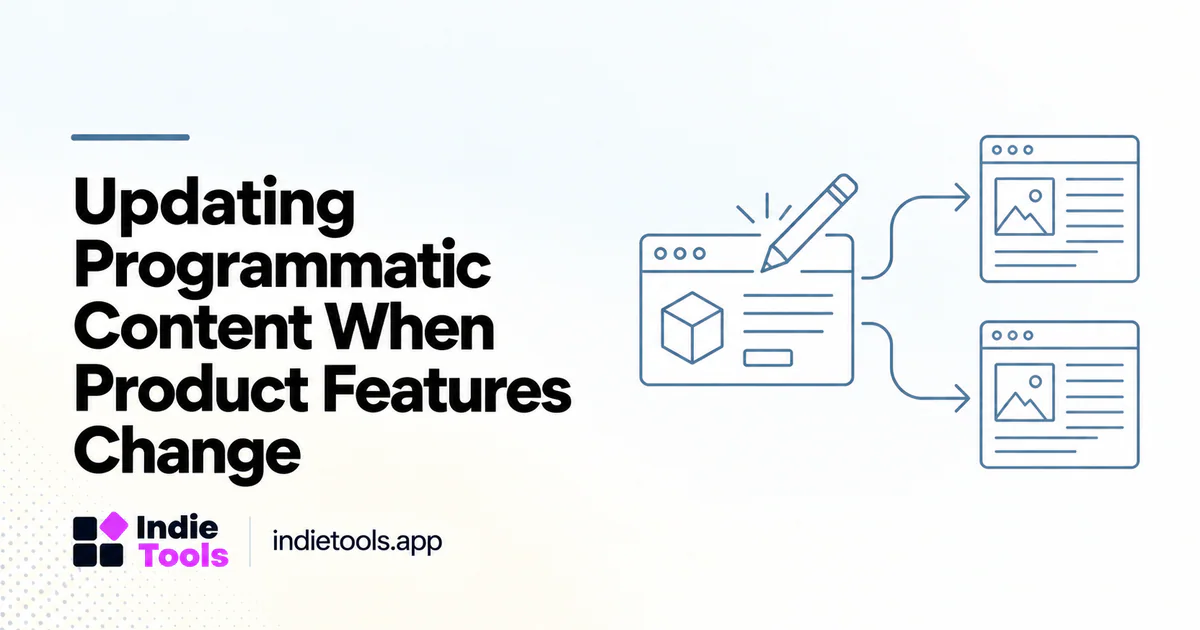
Update programmatic content by tracing a changed product fact to every page that depends on it. Rewriting the product description alone is not enough when category summaries, comparisons and benchmark explanations reuse the same information.
The central requirement is dependency tracking. A maintained content system should know which fields support each claim, who reviews changes and when an automated update needs editorial judgment rather than a simple re-render.
Classify the change
A typo correction, price change, removed integration and product shutdown have different consequences. Assign a change type before deciding how widely to refresh content. A minor wording edit should not automatically change every page's publication date.
Record the source and effective date when available. The day your system notices a change may differ from the day the provider made it. Preserve that distinction when the timing matters to a comparison or historical report.
Keep a claim-to-source relationship
Store important product facts as structured observations with source URLs and review dates. Link those observations to the pages or modules that use them. This makes it possible to identify affected content without searching manually through every article.
For an illustrative integration claim, the record might support a product card, a filtered collection and two comparison tables. A change should create review tasks for all four uses, not silently update one card while the articles continue describing the old capability.
Separate automatic and editorial updates
A changed product name can often be reflected consistently through shared data. A removed feature may require a new explanation of who the product suits. A price change can invalidate a cost comparison whose conclusion depends on a particular workload.
Define which changes can be rendered automatically and which should pause publication or raise a review flag. The goal is not to make every update manual. It is to prevent automated consistency from being mistaken for accurate reasoning.
Use meaningful freshness labels
Show the measurement date for measured data and the review date for editorial claims. A page generated today from old observations should not imply that its underlying evidence is new.
Google's people-first guidance cautions against changing dates simply to make content appear fresh when it has not substantially changed. [1] Keep the public date tied to a real action and maintain a more detailed internal history for operational use.
Handle discontinued products carefully
Verify the status from an appropriate source before labeling a product discontinued. A temporary outage or failed fetch is not enough. When the status is confirmed, explain what changed and update links or comparison conclusions that depended on continued availability.
Do not automatically replace the product with an unrelated sponsor or redirect every old page to a generic category. Consider whether the historical page still helps users understand the product and find a relevant next step. The decision should follow content purpose and URL history.
Test the refresh path
Create a controlled change in staging and inspect the resulting pages. Check visible text, metadata, structured data, links and cached output. A database value can update correctly while a generated article remains stale in another cache layer.
Keep a record of the affected URLs and review outcome. This makes it easier to investigate an inconsistency later and to distinguish a failed refresh from an editor's deliberate decision to preserve historical context.
Monitor the content system, not just publication counts
Track overdue reviews, unresolved source conflicts and pages depending on stale observations. These measures reveal maintenance risk more directly than the number of articles published each week.
An illustrative monthly review can prioritize pages with important commercial claims or high reader activity. This is an editorial allocation method, not a claim about a Google freshness formula. Review effort should follow the likelihood and consequence of inaccuracy.
Questions about content updates
Should every change update datePublished? No. Publication and modification dates serve different purposes; use them accurately.
Can a crawler decide that a feature was removed? It can flag a change, but absence from one page may need human verification.
What is the best long-term improvement? Make every important claim traceable to its source and every dependent page discoverable when that source changes.
Explore related IndieTools resources: product categories and founder updates and releases.
Continue your research
- Consistent Product Descriptions Across Directories
- Turn Release Notes into Useful Directory Updates
- Content QA for 100 Programmatic Articles
Sources and verification
Sources consulted for this article on October 1, 2026. Product capabilities are documented claims unless an actual test is explicitly described.