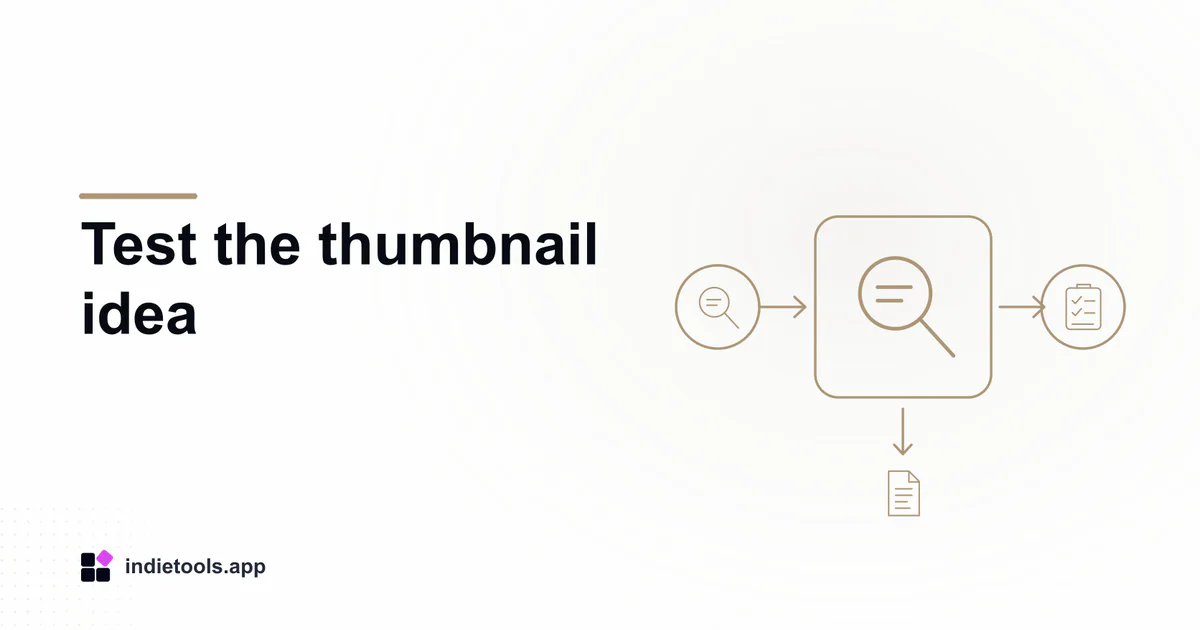
Turn thumbnail feedback into an experiment by writing down the viewer question, the proposed visual change and the outcome that would make the change useful. An AI score can help choose an idea to test, but it cannot stand in for a result from the intended audience.
Viral Hook Analyzer, listed in the Serbia collection, describes thumbnail analysis among its creator features. The listing is a discovery starting point, not evidence that its scores predict a particular channel's click-through rate or watch time. Keep those claims separate when evaluating the tool.
State the video's promise first
Write one sentence describing what the viewer will learn or experience. Then inspect the title and thumbnail together. They should make that promise understandable without implying an outcome the video does not deliver.
For a software demonstration, a readable before-and-after state may communicate more than a dramatic but unrelated image. For an explanation, the visual may need to identify the question or object being examined. Evaluate the design in relation to the actual content rather than a generic formula for attention.
Make variants meaningfully different
Choose a specific hypothesis, such as whether the key object is too small or whether the title and image repeat information unnecessarily. Create variants that address that hypothesis while preserving the same truthful promise.
Record what changed. If every element differs, a winning variant may be useful but the explanation for its performance remains broad. Avoid claiming that a particular color caused the result when the text, composition and subject all changed at the same time.
Use the platform's current experiment rules
YouTube's testing documentation describes title and thumbnail experiments, eligibility requirements and results based on watch time. It also recognizes outcomes where the variants perform similarly or the result is inconclusive.
Check whether the specific video and account are eligible before designing the workflow around that feature. Follow the current experiment interface rather than assuming that every format or account can use the same controls. Preserve the platform's actual result label in the review record.
Separate observed results from interpretation
An experiment result tells you what happened under its conditions. The editorial explanation is an interpretation that should remain open to revision. Keep the original hypothesis, experiment dates, variant files and result together.
If the result is inconclusive, do not rename the variant with the largest displayed number as the winner. Consider whether the designs were too similar, the available audience was limited or the question was poorly framed. Those possibilities suggest different next steps; none justifies inventing certainty.
Review the content after the click
A more enticing package should still lead into a video that meets the expectation it creates. Examine viewer behavior and relevant feedback after adopting a variant. A clear image that attracts an appropriate audience is more useful than a misleading one that encourages quick exits.
Keep AI feedback as a separate input in this review. A model might highlight unreadable text or a weak focal point, while the platform experiment measures viewer behavior. Both can inform a decision without being treated as interchangeable evidence.
For the analysis of what happens inside the video, use the companion hook and retention guide. It provides a separate framework for evaluating model suggestions against observed viewing patterns after the packaging decision has been made.
 AEON Intel