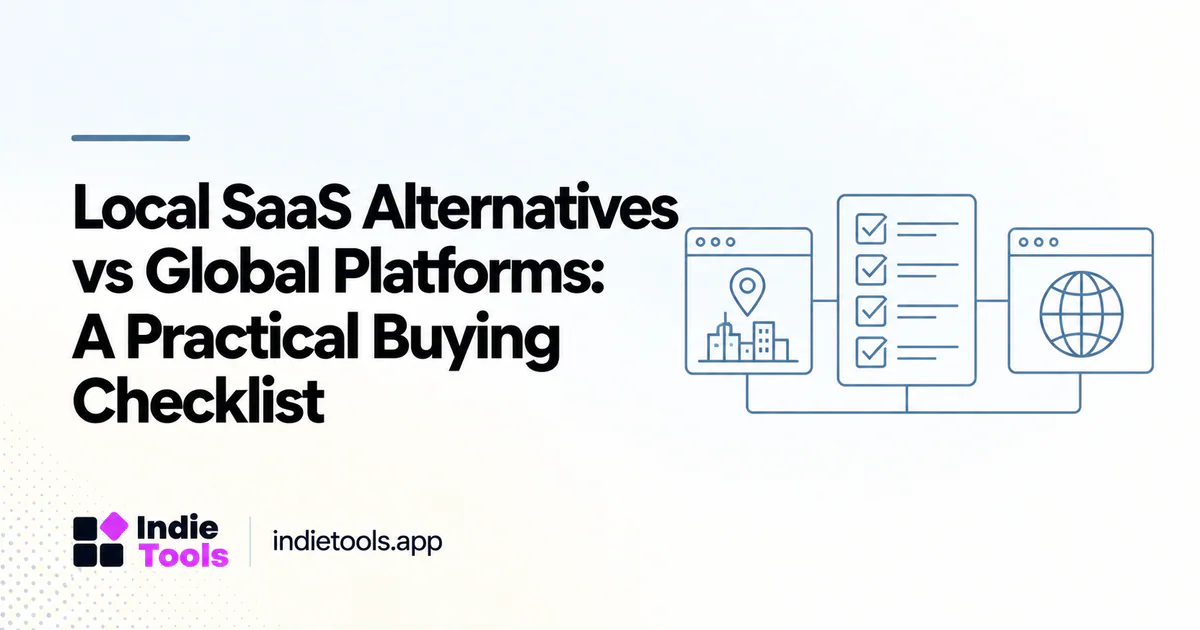
Compare a locally connected SaaS product with a global platform using the same workflow, evidence and operating requirements. Location can matter, but it should not substitute for verifying capability, support, data handling and the path to leave the service.
A small regional product may fit a specific workflow well. A larger platform may offer broader integrations or a different support model. Neither conclusion follows automatically from geography or company size. The buying decision needs a defined task and current product evidence.
Explain why local relevance matters
Possible reasons include language, a specific integration, working-hour overlap or familiarity with a business process. Write the reason in testable terms. “We need support in Turkish during our operating hours” is more useful than “we prefer local software.”
Do not assume the local option meets those requirements. Similarly, do not assume a global product cannot. Ask both providers the same concrete question and keep their answers with the evaluation record.
Verify the product identity
Record the official product and company information relevant to the purchase. A directory country label is not enough to establish a legal entity or infrastructure location. IndieTools specifically distinguishes founder-selected country information from those forms of verification. [1]
When the buying process requires contractual or regulatory review, use appropriate official documentation and qualified advice. A product comparison article should not convert a discovery attribute into a compliance conclusion.
Run the same workflow test
Prepare sample data and a representative task. For an appointment tool, that might include creating an availability window, receiving a booking, rescheduling and sending a notification in the required language. Test the failure path as well as the happy path.
Record what works without customization and what requires manual effort. A local integration can be valuable, but it should be verified at the workflow level. A logo on an integrations page does not show whether the exact event or data field you need is supported.
Compare support and continuity
Check the support channels, languages and coverage hours. Ask how incidents and maintenance are communicated. A direct relationship with a small team can be helpful, but the evaluation should still document what happens when the usual contact is unavailable.
Review data exports, backups and migration options. Avoid speculative claims about which vendor is more likely to survive. Instead, plan for continuity based on the importance of the workflow and the practical ability to recover or move the data.
Compare the full operating cost
Use the same users, capacity and billing period for both candidates. Include setup, integrations and recurring manual work. A lower subscription is not automatically cheaper when the team must repeatedly repair or reconcile the workflow.
An illustrative decision may favor a regional tool because it handles a required local process directly. Another may favor a global platform because an existing integration removes substantial administrative work. The useful explanation is the verified difference, not a general verdict about local or global software.
Keep the decision reversible where possible
Start with a limited rollout and defined acceptance criteria. Avoid migrating the most critical records before the export and recovery path has been tested. Document who can stop the pilot and what evidence would justify expanding it.
Use feedback from the people performing the task, not only the person purchasing the license. A tool can satisfy an administrator's checklist while creating friction for customers or teammates. Include those perspectives in the final review.
Questions before choosing an alternative
Does a local founder imply local hosting? No. Verify hosting and data-processing requirements independently.
Is a global platform automatically more capable? Not for every task. Compare the workflow that matters rather than the breadth of unrelated features.
How should a directory support the choice? By helping readers discover candidates and inspect sourced facts, while keeping location, availability and product quality as separate questions.
Explore related IndieTools resources: product categories.
Continue your research
- Find Software Alternatives by Workflow
- International SaaS Support: Coverage and Handoffs
- SaaS Competitor Research by Country
Sources and verification
Sources consulted for this article on October 1, 2026. Product capabilities are documented claims unless an actual test is explicitly described.