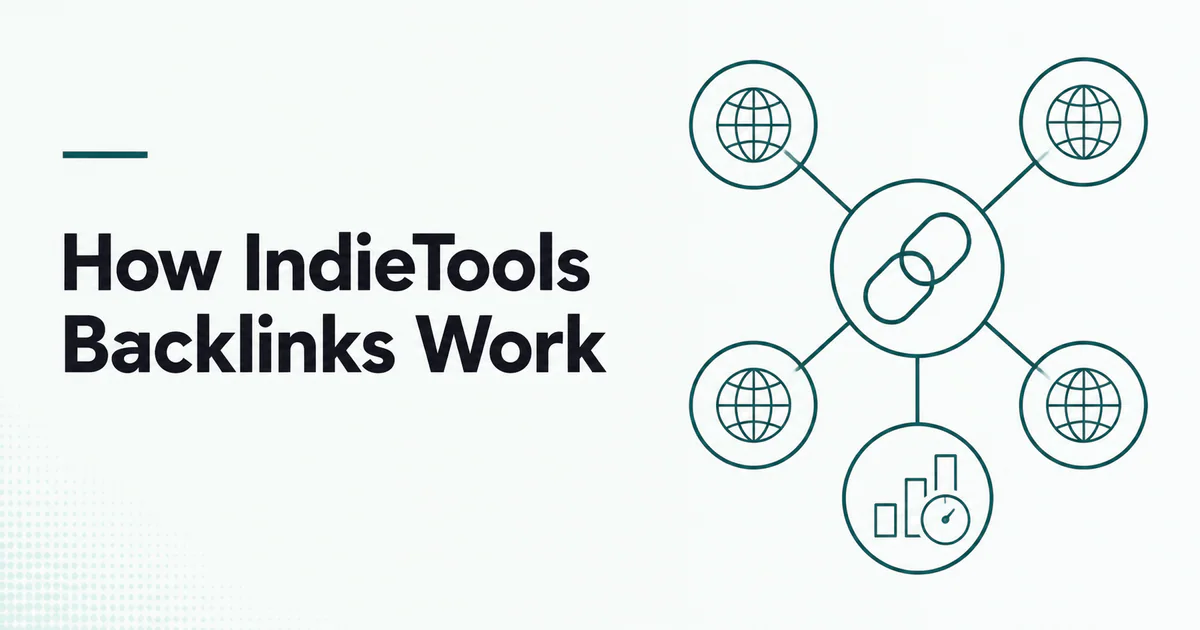
Quick answer: Free IndieTools listings use a nofollow website link by default. A verified IndieTools badge on the product website enables the Free DoFollow benefit while that badge remains verified. Standard and Authority include a permanent DoFollow website link without requiring a website badge. Authority also includes two contextual DoFollow links in two different relevant blog articles and one 30-day Featured period.
This guide describes the implementation checked on October 11, 2026. Confirm current prices and availability on the IndieTools pricing page. A product link helps readers reach the official website; it does not guarantee indexing, rankings, traffic or sales.
Website links by plan
| Plan | Product website link | Badge requirement |
|---|---|---|
| Free | NoFollow by default; DoFollow while the website badge is verified | Required before a new Free review request; enables the DoFollow benefit while eligible |
| Standard | Permanent DoFollow | No website badge required |
| Authority | Permanent DoFollow, plus two contextual blog links | No website badge required; includes a verified product badge |
Free allows unlimited product listings. Save a private draft, verify the IndieTools badge on that product website, then explicitly submit for manual review. Without verification the listing stays a draft; the founder can verify later or choose a paid plan. Verification also enables the product-specific link benefit, but never submits or publishes the listing by itself. Standard and Authority are one-time purchases for a single product; paid submissions require payment and successful validation before publication.
What “dofollow” means
“Dofollow” is industry shorthand, not an HTML attribute. An ordinary followed link omits nofollow, sponsored and ugc qualification. Both followed and nofollow links can be clicked by visitors. Search engines decide independently how to process them.
Read dofollow vs nofollow links for the distinction. A useful destination, clear product identity and relevant context matter alongside an attribute.
How the Free badge benefit works
New Free review requests require website badge verification. Already approved Free listings remain published if their badge is removed; their website link returns to nofollow under the existing recovery policy. To enable the Free DoFollow benefit, add the IndieTools badge to the exact product website shown in the dashboard and complete verification. Keep the badge available to retain the benefit.
The website badge is different from Authority's verified product badge. It is also different from paying for Standard or Authority: those plans include the permanent website link without requiring a badge on the external website.
What Authority's two blog links include
Authority includes one contextual link to the product website in each of two different relevant blog articles. The editorial team checks the article, surrounding context and destination before marking a placement delivered. Owners can follow delivery in their dashboard.
These are additional to the website link on the product page. The owner does not need to write an article, provide a brief or approve an AI-generated blog draft. Relevance and accurate product descriptions still matter; a paid placement is not a positive product verdict.
Featured visibility and permanent benefits
Authority includes a single 30-day Featured period. There is no separate Featured purchase. Twelve shared slots place six different products on the homepage and six in the discovery sidebar. Products queue when all slots are occupied, and the full period begins when placement starts.
Featured links open the IndieTools product page. The paid area is labelled and does not purchase organic directory rank. When the period ends, the permanent product benefits and delivered blog links remain. Read the plan comparison for the complete distinction.
Search-policy context
Google recommends sponsored or nofollow qualification for compensated links. A paid followed link can conflict with that guidance even when no ranking result is promised. Review Google's outbound-link guidance and link-spam policy when assessing any paid link.
How to evaluate the listing
Check that the product name, tagline, category, screenshots and website accurately describe the current product. Test the destination on mobile and desktop. Use the listing optimization guide to improve the page before promoting it.
Measure referral visits, official-site clicks, activation and retained customers separately. Domain Rating is a third-party metric; a change in it does not establish why customers arrived. Compare the context and value of a placement rather than treating a link count as a business result.
Frequently asked questions
Can a Free listing have a followed website link?
Yes, while its IndieTools website badge is verified. A new Free listing needs verification before the owner can submit it for manual review; verification alone never guarantees approval. Without this or an independent active link entitlement, the Free website link is nofollow.
Must an Authority customer write a blog article?
No. The editorial team delivers two contextual links in two different relevant articles. There is no owner article-writing or AI-draft approval step.
Does paying buy an organic ranking or guarantee search visibility?
No. Payment buys the described entitlements and labelled placement. Search engines and external AI systems control their own retrieval, indexing and recommendations.
What happens to earlier valid purchases?
Existing valid paid entitlements keep their applicable benefits. The dashboard and current pricing page explain available upgrades for the same product record.
 Appnary