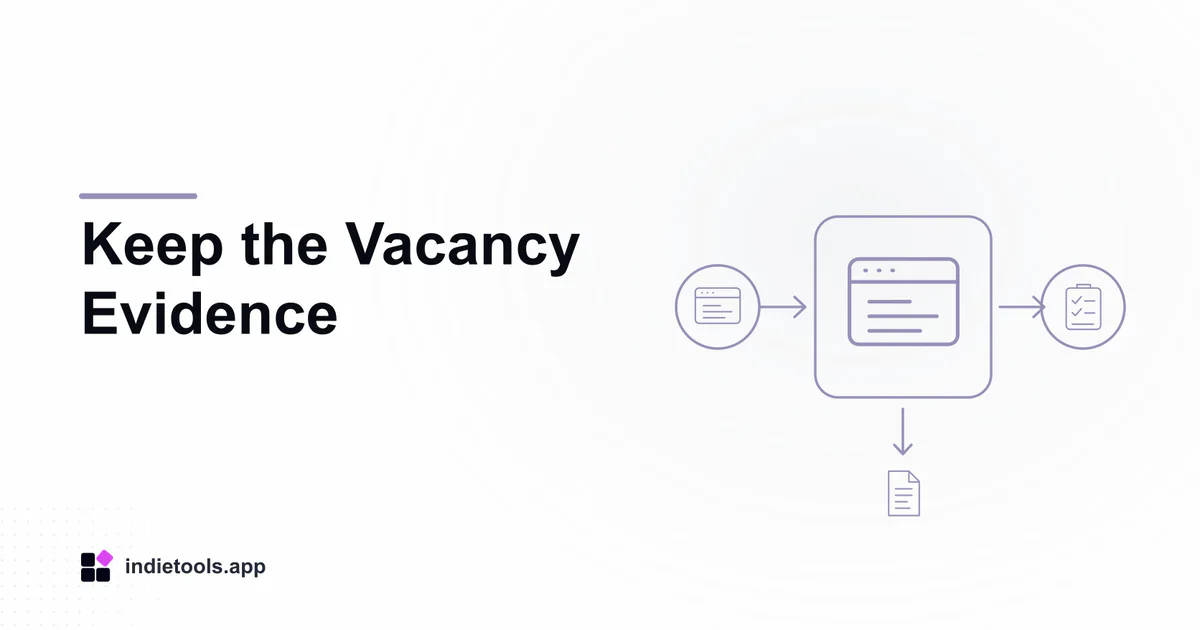
A useful data science job shortlist preserves the original vacancy and your reason for considering it. Without that record, similar job titles blur together and important restrictions disappear into copied summaries. Keep the research small enough to verify before spending time on an application.
This proposed workflow begins with Find Data Science Jobs, found in the Sri Lanka product catalogue. It does not report applications sent, employer checks performed or any hiring outcome.
Define the work you want to do
Write a few concrete responsibilities that matter to you: building data pipelines, running experiments, deploying models or communicating analyses. Add the work arrangements you need and the experience you can truthfully demonstrate.
Use that description to select search terms and filters. Avoid starting with an aspirational title and then forcing every result to fit it. Different employers can use the same title for substantially different jobs.
Save the employer source alongside the discovery link
For each promising result, retain the board URL and the original vacancy URL where available. Note the employer name, role identifier and review date.
Open the original source through a legitimate employer or recruiting-system path. If you cannot verify that relationship, leave the entry unresolved. Do not provide sensitive personal information merely because a page uses a familiar company logo.
Separate required evidence from optional preferences
Read the original description and record the requirements relevant to your decision. Distinguish clearly stated necessities from preferred experience and from your own interpretation.
For each important requirement, identify an honest example from your work or education. If you lack evidence, note the gap. A job-search record should help tailor an accurate application, not encourage inventing credentials or experience.
Check the working-location conditions
Record the actual remote, hybrid or on-site terms. Note any specified country, time-zone or office requirement. A broad search filter is not a substitute for these details.
Keep unanswered eligibility questions separate from confirmed requirements. Seek clarification through the employer's appropriate channel when necessary; do not infer authorization or sponsorship from silence. This workflow does not provide legal advice about employment or immigration.
Deduplicate before prioritizing
The same role may appear in several locations or through multiple discovery pages. Compare employer role identifiers and original descriptions before counting them as separate opportunities.
Prioritize the entries with a clear responsibilities match and verified application path. Leave uncertain roles in a research state rather than mixing them with ready-to-apply entries. This makes the next action visible and avoids repeating the same investigation.
Preserve the version used for your application
Before applying, recheck that the vacancy remains open and that key requirements have not changed. Keep a lawful personal note of the relevant description and the date you reviewed it, without collecting unnecessary personal details about recruiters.
The job-board evaluation guide explains the discovery boundaries. Current search functions are described on Find Data Science Jobs. The shortlist is complete when every entry has a source, a reason and a next action, even if some entries remain unresolved or are deliberately rejected.

 IcyZip
 Acres
Acres Plainrow
 code.live
 Xeramail Temp Mail