A useful founder collaboration request explains why a particular reader would benefit from a particular resource. It does not begin with a desired anchor text or a promise to exchange ranking credit. Indie Chains, a product listed in the Argentina catalogue, offers a context for discovering potential partners and sending structured requests. The workflow below can be used wherever the conversation happens.
This is a proposed editorial process, not a report of outreach results or a guarantee that a publisher will accept a request. It is designed to make both acceptance and refusal straightforward.
Prepare the resource before the message
Choose an asset that answers a question a reader is likely to have. A reproducible example, a clear comparison method or a concise tutorial is easier to evaluate than a product homepage containing several unrelated promises.
Open the resource without signing in. Check whether its central explanation is visible, whether screenshots match the current interface and whether claims have supporting sources. Remove time-sensitive statements you cannot verify. If access requires an account, say so in the proposal rather than allowing the recipient to discover the restriction later.
Write down the resource's limitation as well as its benefit. For instance, a template may support one export format or demonstrate one workflow rather than cover an entire category. That boundary helps a collaborator describe it accurately.
Build a short relevance brief
Record the prospective page, the reader task and the gap your resource might address. Use an actual paragraph or section as context, but do not copy a long passage into your message. A specific observation demonstrates that you have read the page.
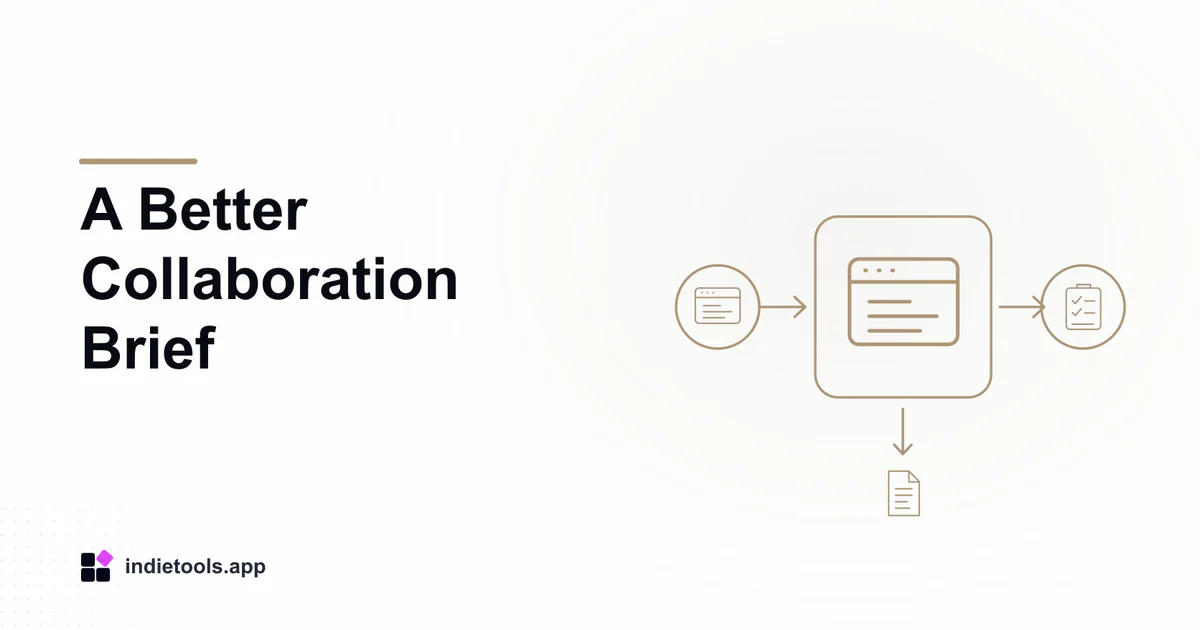
Then explain the proposed contribution in ordinary language. The recipient should be able to answer three questions: what is being offered, whom it helps and what decision is requested. Avoid inflated claims such as “essential for every founder.” They make the proposal harder to trust and harder to edit.
Leave the publishing decision open
Offer an example, an interview response or a resource for review. Let the publisher decide whether to use it, how to describe it and whether a link is appropriate. Do not require a positive assessment or a particular link attribute as the price of participating.
If there is payment, a sponsorship arrangement or another material incentive, state it before agreement. Google's link-spam guidance distinguishes legitimate advertising with qualified links from schemes intended to pass ranking credit. An editorial workflow should make those relationships easier to identify.
Keep an approval record
Save the agreed scope, supplied facts and permission to reuse any images or quotes. Confirm where a correction should be sent. If a statement about your product changes before publication, update the collaborator rather than silently relying on an old brief.
For a shared tutorial, review technical accuracy without trying to control the author's independent conclusion. Separate factual corrections from preferences about tone. This keeps the collaboration useful to the reader and manageable for both parties.
Observe what happened after publication
Check the published destination and the context around any link. Track relevant visits and a meaningful next action, such as reading the documentation or completing a product evaluation. A click alone does not establish intent, and a domain metric change cannot be attributed to one collaboration without further evidence.
Retain declined and unanswered proposals in the same record. Review whether the resource, audience match or request itself needs improvement. The directory evaluation guide helps decide whether a discovery service is useful before repeating this process at a larger scale.
Source
Indie Chains supplies the product context. The message and review procedure here are editorial recommendations, not a documented platform outcome.
 Indie Chains