A Node.js label does not tell you whether a tool performs its important work inside a desktop extension, on a remote server or through another service. Locate those boundaries before evaluating responsiveness, offline behaviour or the handling of uploaded data.
The Node.js catalogue, observed on October 3, 2026, includes Neyko FX, described as an After Effects panel, and Kezio, described as a collection of web tools and Telegram bots. Their listed stack associations are discovery facts, not an independently inspected execution diagram.
Trace one input to one output
Choose a representative task and write down its starting point. For a creative panel, that might be a selected project item. For a browser utility, it might be an uploaded sample file or entered text. Use synthetic material that you are permitted to process.
Follow the task through the user interface: where does progress appear, what remains responsive, and where does the result become available? Ask the vendor which stages run locally and which require a network connection. A desktop-looking interface can still depend on remote processing.
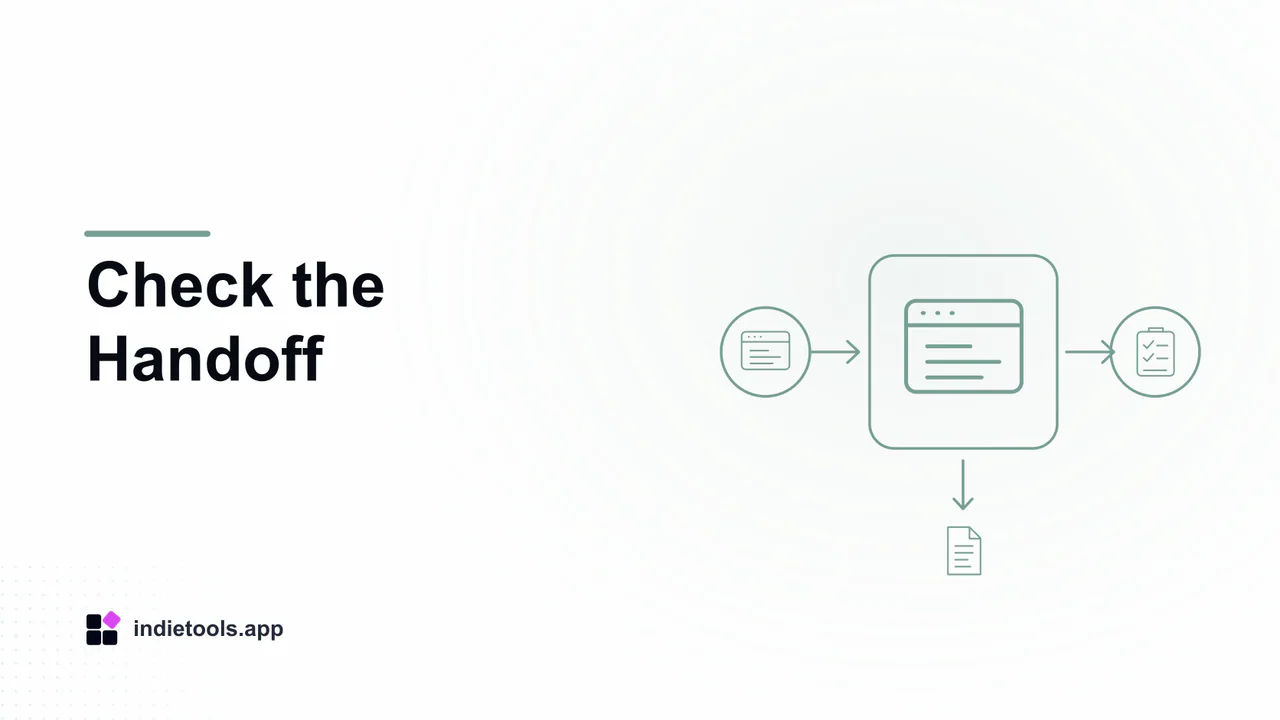
The useful deliverable is a short diagram with interfaces and data transitions. It does not need private implementation details. It should explain what the user can expect when a connection fails or the host application closes.
Review responsiveness at the correct layer
Node.js explains that long-running callbacks can block other work on the event loop. That is a reason to inspect workload placement, not proof that any listed product has a blocking problem.
During an authorized trial, perform a normal task and then a larger but supported task. Observe whether cancellation, navigation and status updates remain available. Avoid arbitrary stress loads or unsupported file sizes; the purpose is to evaluate a documented user workflow.
For an application embedded in a creative host, distinguish the panel's response from the host's rendering workload. A delayed frame render does not automatically mean the Node.js process is responsible. Record the symptom precisely before assigning a cause.
Ask what happens after interruption
Close the interface during a harmless test task, then reopen it through the normal workflow. Does the task continue remotely, disappear, or become recoverable? Is there a visible identifier that support can use to find the result?
For a bot, consider a repeated message after a network timeout. For a panel, consider an action applied to a project that has since changed. The product should explain whether the repeated action starts new work or reconnects to existing work.
These questions also clarify data expectations. “Runs in a panel” and “runs in a browser” describe interfaces, not necessarily storage or processing location. Ask for explicit documentation before making privacy claims.
Compare operating behaviour, not stack prestige
Write down supported inputs, processing boundaries, interruption outcomes and unresolved questions for each candidate. Compare tools that solve the same task; an extension and a utility collection are not interchangeable merely because both declare Node.js.
If heavy processing is central to your own implementation, continue with Node.js job responsiveness planning, which separates CPU work, progress reporting and cancellation semantics.
 IcyZip
 code.live
 Xeramail Temp Mail
 Stardew Valley Tracker