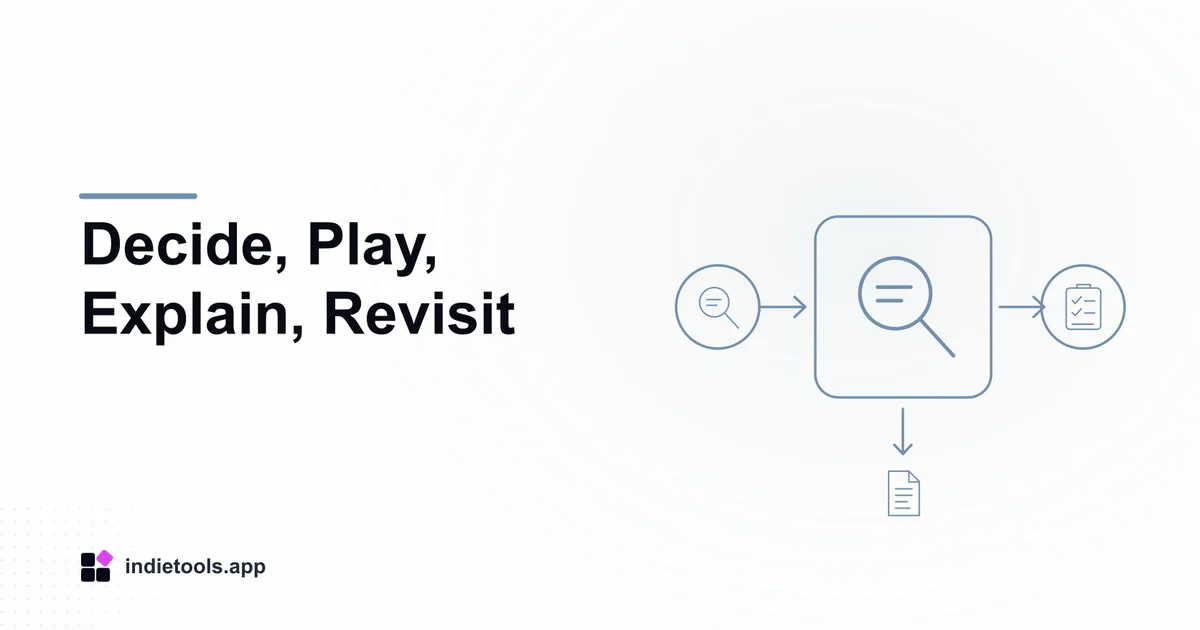
A short chess review routine works best when it preserves your reasoning before analysis shows the answer. Choose one position, make a decision, play the continuation and explain the difference between your expectation and what followed. The objective is a concrete lesson from one exercise, not a promised increase in rating.
This proposed routine uses ReplayChess, a product found through the India catalogue. Its public site describes playable historical positions and later engine comparison. No player results or training experiment are reported here.
Pick one position with a clear starting state
Choose a position available in the product and confirm whose turn it is. Before playing, inspect immediate threats and the location of the kings. If the interface provides historical context, read enough to understand the exercise without opening the continuation first.
Keep the session small. Moving through many diagrams quickly can make it difficult to remember why you selected a move in any one of them. One well-reviewed position is a more manageable unit for this routine.
Write a candidate and its intended reply
Record the move you want to play and the response you expect. Add a short sentence about the idea behind it. You do not need a complete analysis tree; you need enough to compare your original thought with the later evidence.
If you see a second plausible candidate, note why you rejected it. That comparison can reveal whether you missed a tactical resource or simply preferred a different kind of position.
Play without changing the original note
Use an available friend or engine mode and play the continuation. Leave the initial note intact even if the game immediately disproves it. Editing the prediction afterward would remove the most useful comparison.
For a shared challenge, agree that the exercise is about discussing decisions rather than using one result as a general measure of playing strength. Prior knowledge of the historical game can affect the outcome.
Review the first meaningful divergence
After the game, inspect the analysis offered by the tool. Find the first point where your expected reply differs from the stronger continuation or where your plan no longer works.
Replay that branch slowly enough to explain the concrete consequence. A numerical evaluation can direct attention, but the note should describe the idea: a piece becomes undefended, a threat arrives with tempo or a defensive resource changes the sequence.
If you cannot explain the difference, keep that uncertainty in the note. Do not replace it with a confident sentence copied from an engine label.
Keep one lesson and revisit the position
Write one takeaway specific enough to recognize in another game. Avoid an empty conclusion such as “calculate better.” Identify what you failed to inspect or which candidate deserved more attention.
On a later visit, return to the starting position and explain the reason before replaying the line. Remembering the move is different from understanding it; the explanation is the useful check.
Confirm the tool supports your routine
Check current access to positions, challenges and review features on ReplayChess. The companion practice-app evaluation discusses those selection criteria. Keep your own small review notes where you can find them, regardless of which app presents the board. The routine remains useful only when the analysis becomes understandable to the person practicing.
 РАЗНОС (Raznos)